

 Image 1 of 1
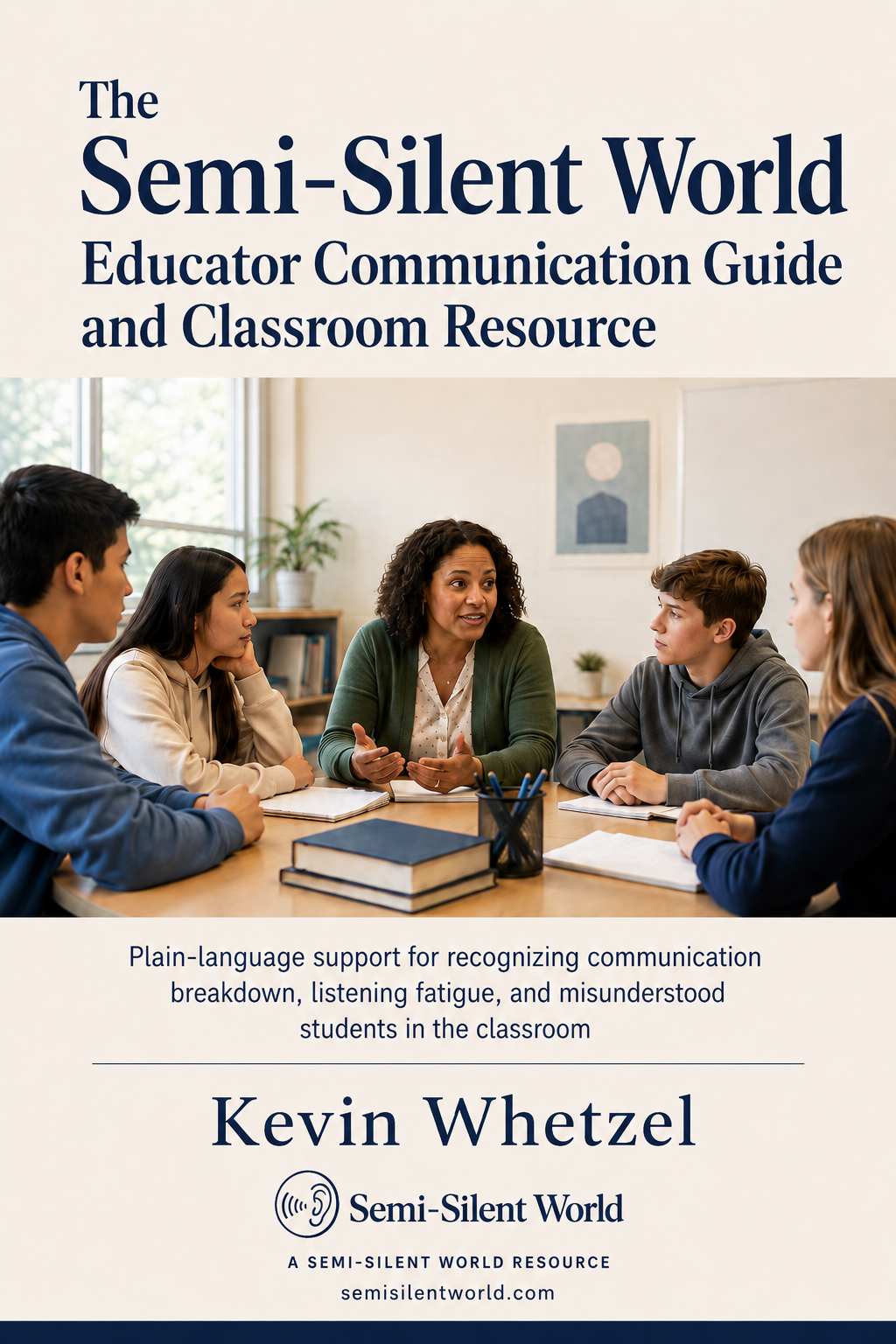
A practical educator guide for teachers, school staff, counselors, support personnel, and administrators who want to better understand how hearing challenges can affect learning, behavior, confidence, participation, and classroom communication.
Many students who struggle to hear or understand clearly are not always identified right away. Some may appear distracted, quiet, confused, resistant, uninterested, or difficult — when in reality, they may be working hard to follow classroom instruction, peer conversation, group discussion, or fast-moving directions.
This guide helps educators see communication through a more human lens and offers plain-language tools to reduce misunderstanding, support students more effectively, and create classrooms where students are not overlooked simply because they appear to be hearing.
Format: Digital PDF
Length: 254 pages
Best for: Teachers, school staff, counselors, support personnel, administrators, and classroom teams
Focus: Listening fatigue, classroom misunderstanding, student confidence, communication breakdown, and practical support
Includes: Educator tools, classroom communication strategies, reflection prompts, repair phrases, and printable resource pages
Style: Plain-language, practical, experience-based, and non-clinical
Why hearing and understanding are not always the same
How listening fatigue can affect learning, behavior, and participation
Why some students may appear distracted, confused, withdrawn, or difficult
How classroom noise, distance, speed, and group discussion can create barriers
Why students may pretend they understood when they did not
Practical ways to check for understanding without embarrassment
Communication habits that help students stay included
Repair phrases teachers can use when communication breaks down
Classroom strategies for clearer directions and better follow-through
Reflection pages and printable tools for real classroom use
A practical educator guide for teachers, school staff, counselors, support personnel, and administrators who want to better understand how hearing challenges can affect learning, behavior, confidence, participation, and classroom communication.
Many students who struggle to hear or understand clearly are not always identified right away. Some may appear distracted, quiet, confused, resistant, uninterested, or difficult — when in reality, they may be working hard to follow classroom instruction, peer conversation, group discussion, or fast-moving directions.
This guide helps educators see communication through a more human lens and offers plain-language tools to reduce misunderstanding, support students more effectively, and create classrooms where students are not overlooked simply because they appear to be hearing.
Format: Digital PDF
Length: 254 pages
Best for: Teachers, school staff, counselors, support personnel, administrators, and classroom teams
Focus: Listening fatigue, classroom misunderstanding, student confidence, communication breakdown, and practical support
Includes: Educator tools, classroom communication strategies, reflection prompts, repair phrases, and printable resource pages
Style: Plain-language, practical, experience-based, and non-clinical
Why hearing and understanding are not always the same
How listening fatigue can affect learning, behavior, and participation
Why some students may appear distracted, confused, withdrawn, or difficult
How classroom noise, distance, speed, and group discussion can create barriers
Why students may pretend they understood when they did not
Practical ways to check for understanding without embarrassment
Communication habits that help students stay included
Repair phrases teachers can use when communication breaks down
Classroom strategies for clearer directions and better follow-through
Reflection pages and printable tools for real classroom use